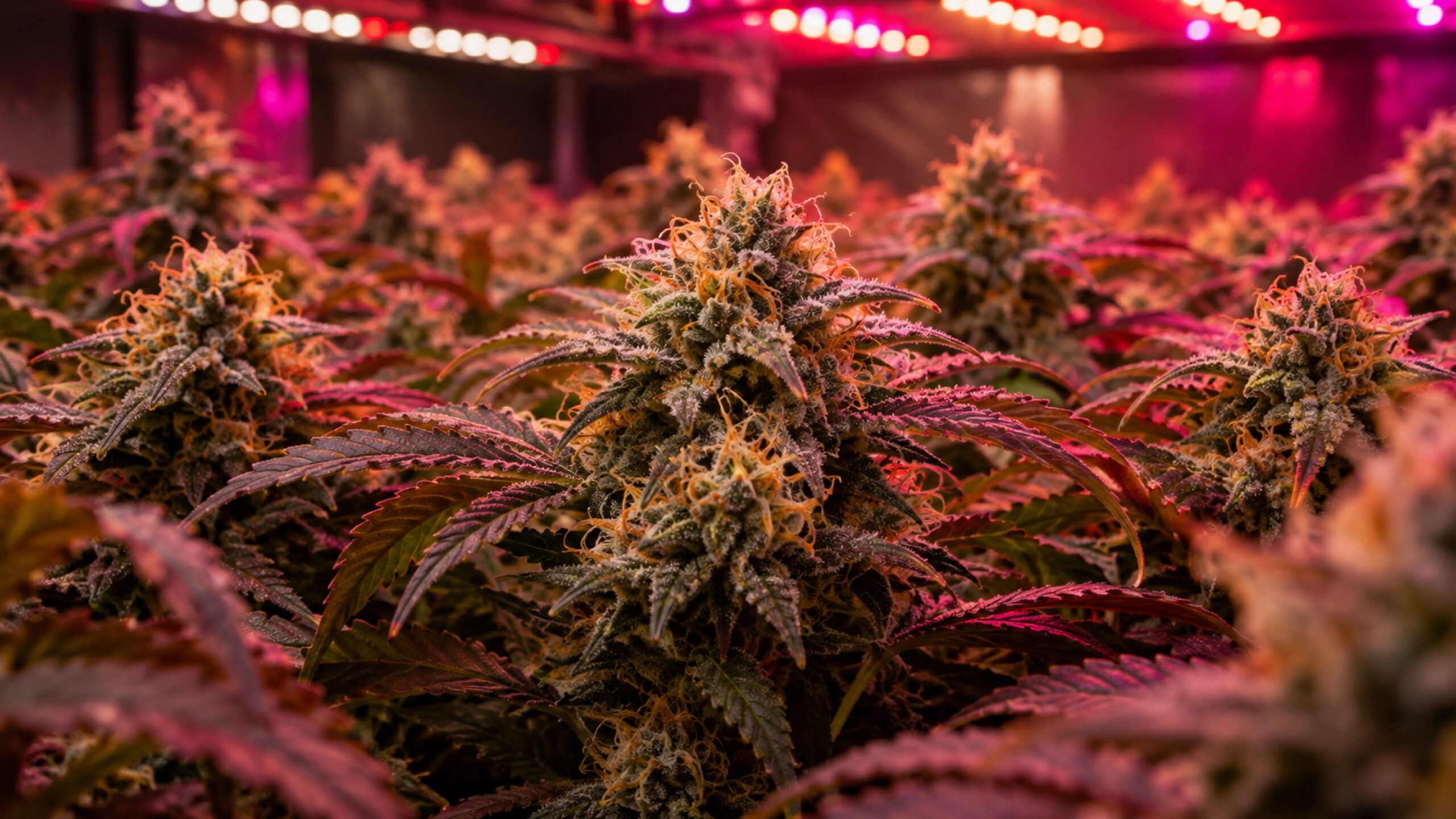
LED Grow Lights for Commercial Cannabis
Most cannabis rooms are specified in watts. Watts are not what the plant sees.
A room laid out on "one 1000W fixture per bench" tells you what you will pay the utility. It does not tell you the canopy average, the uniformity across the bench, or how much light reaches the lower third of a dense flower canopy. Those three numbers decide the crop.
We build fixtures for facility operators who are working to a canopy PPFD target and a defined footprint — and we publish the measured distribution behind every one, so the layout can be checked before anything is hung.
The lighting logic we design to
Match the footprint first, then the intensity. 18 of the 28 fixtures carry a stated flowering and vegetative footprint. Pick the fixture whose flowering footprint matches your bench pitch, then choose the wattage step that lands on your canopy target. Two of our fixtures cover the same 4ft × 6ft bench at deliberately different intensities: the TF 1000W PRO averages 866 µmol/m²/s at 12 inches, the TF 1200W PRO averages 980. That gap is the whole reason both exist.
Decide how much spectrum control you actually need. Our full-spectrum range comes in three control tiers, and the right one depends on whether spectrum is a variable you intend to move:
- Three channels (TF and TR series) — UV at 395nm, deep red and far-red at 660/730nm, and the white/blue base, each dimmable on its own. Use this where UV is dosed on a defined window, or far-red is ramped into late flower independently.
- Two channels (DR series) — UV and far-red share a dimmer against the white/blue base. Fewer parameters per zone once your recipe is settled.
- One channel (SF ECO series) — a fixed full-balance spectrum with no UV and no far-red diodes at all. For rooms running one proven recipe, this puts the fixture's power budget into photons instead of into channels you never move.
Top light alone will not finish the bottom of a dense canopy. Past a certain canopy density, adding intensity from above raises leaf temperature and energy cost without reaching the lower bud sites — the canopy itself is the obstruction. Intra-canopy bars address that directly, on their own control group and usually on a different schedule from the top light.
Run the room from one controller. Fixtures daisy-chain over RJ12 and a single GC001 drives up to 100 of them: three scheduled periods a day, sunrise and sunset ramps from 1 to 60 minutes, per-channel levels, and live temperature, humidity and VPD from its own probes — with safety cut-outs that pull output back rather than hammering a room the HVAC has already lost.
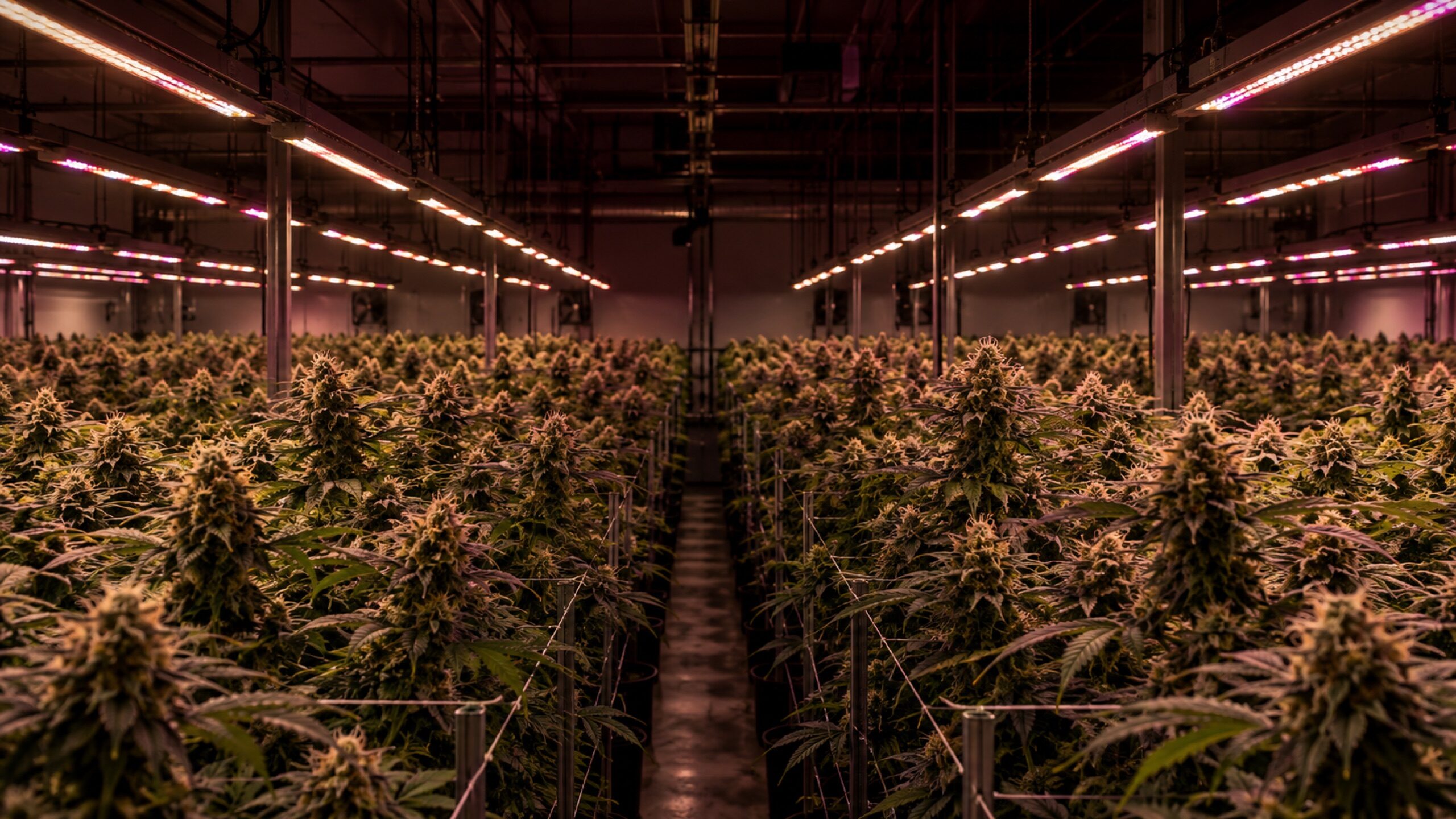
Fixture roles by room
| Room | Fixture | Why |
|---|---|---|
| Flower, 4ft × 8ft benches | TF 1600W PRO — 4,480 µmol/s, 1,300 µmol/m²/s average | Highest single-fixture output in the range; fewer hang points and fewer circuits for the same floor area. Replaces 2,400W HPS. |
| Flower, 4ft × 7ft benches | DR 1500W PLUS — 4,200 µmol/s, 1,225 average | Highest canopy average on the flexible-arm frame; two channels for a settled recipe. |
| Flower, 4ft × 6ft benches | TF 1200W PRO (980 average) or TF 1000W PRO (866) | Same bench, two intensity targets. Take the 1200W with CO₂. |
| Flower retrofit into an existing room | TR 1000W PRO | Same engine and footprint as the TF 1000W on a flexible-arm frame — bar spacing sets around trellis, drip lines and duct runs. |
| Veg and mothers | SF 660D ECO — 539 average over 4ft × 4ft | Runs near its design point at a vegetative setpoint instead of dimmed to a third. Lowest current in the range at 2.38A on 277V. |
| Production flower on a fixed recipe | SF 880D ECO — 2,464 µmol/s over 4ft × 4ft | 24% more photons than the three-channel 720W on the same bench, on one dimmer. |
| Under the canopy | UC120 — 120W, 336 µmol/s over a 2ft × 6ft strip | IP65 with a waterproof port and a diffusing lens; ships with a tripod so it stands rather than needing a hang point. |
| Trial and breeding rooms | TF 720W PRO | Three-channel control at single-bench scale — reproduce a production spectrum strategy without the connected load. |
| Whole-room control | GC001 | Up to 100 fixtures, grouped by zone, with VPD on screen. Ordered separately. |
The fixtures this room uses
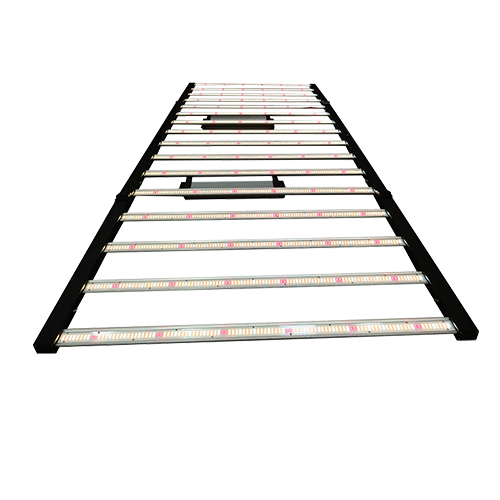
TF 1600W PRO
- 4ft x 8ft
- 4,480 µmol/s
- 1600 W
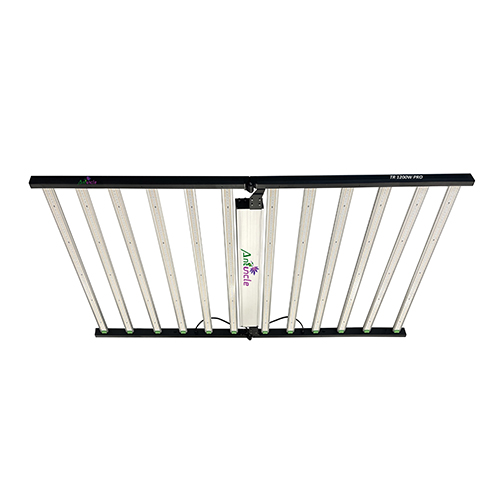
TF 1200W PRO
- 4ft x 6ft
- 3,360 µmol/s
- 1200 W
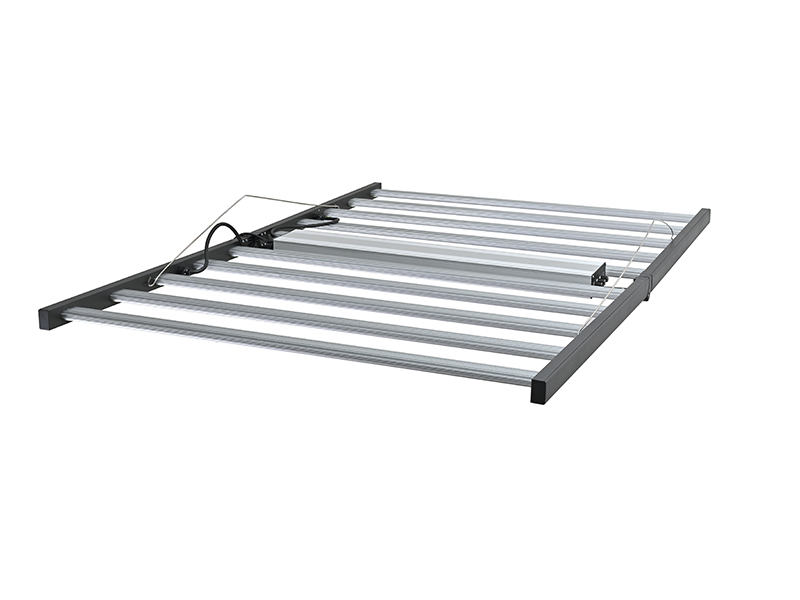
TF 1000W PRO
LH-DF610-1000
- 4ft x 6ft
- 2,800 µmol/s
- 1000 W
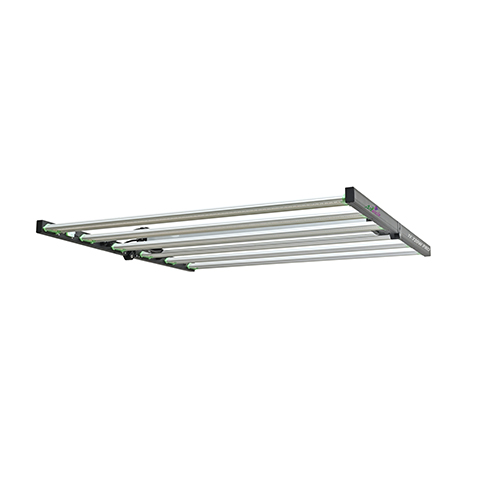
TF 720W PRO
- 720 W
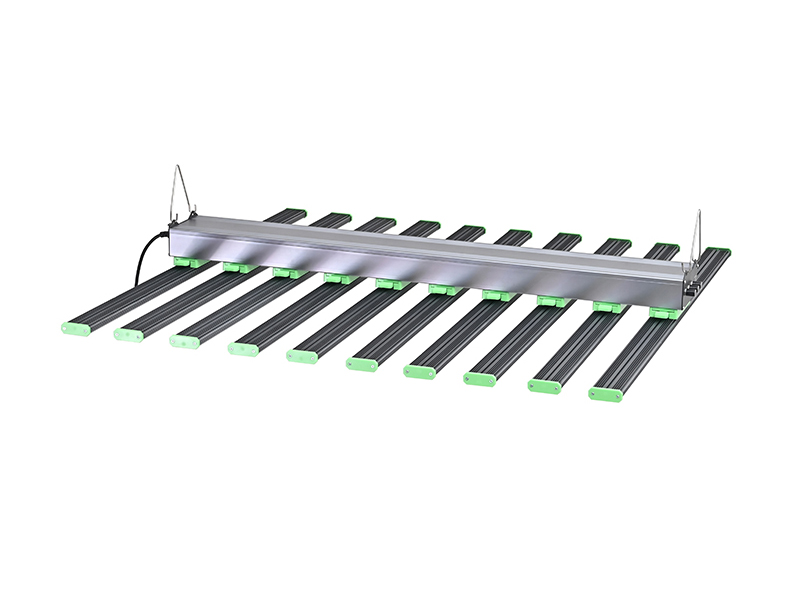
TR 1000W PRO
- 4ft x 6ft
- 2,800 µmol/s
- 1000 W
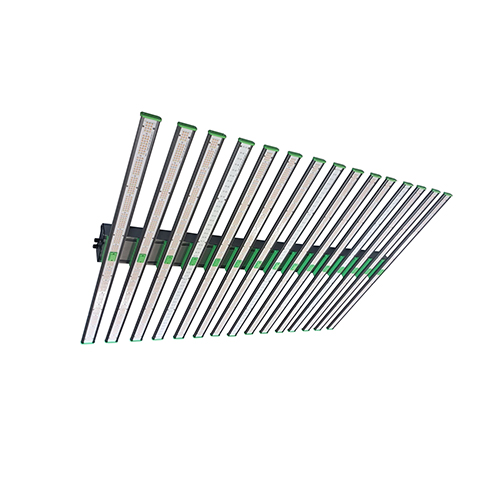
DR 1500W PLUS
- 4ft x 7ft
- 4,200 µmol/s
- 1500 W
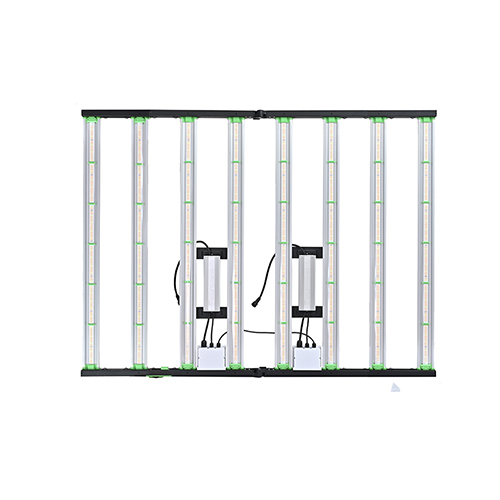
SF 880D ECO
LH-DF46-880
- 4ft x 4ft
- 880 W
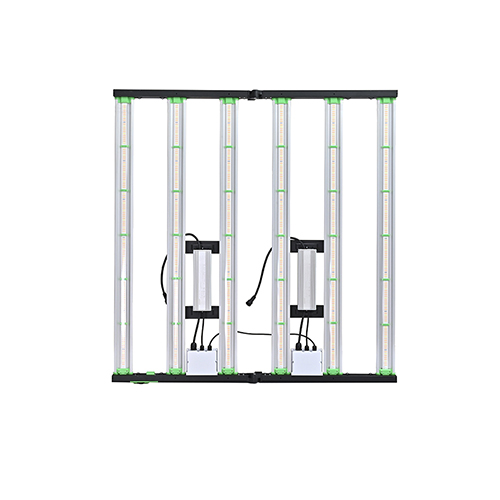
SF 660D ECO
LH-DF46-660
- 4ft x 4ft
- 660 W
Before you specify
What canopy PPFD should I be designing to?
Will more light increase my yield?
How do I dose UV without damaging the crop?
Can I mix control tiers in one facility?
Send dimensions, get a layout.
Room size, ceiling height, tier count and the PPFD you are targeting are enough to start. We come back with a fixture count, a room layout and a factory-direct price.
- Emailinfo@antunclelight.com
- WhatsApp+86-15017918775
- Factory2nd Floor, Building 3, Modern Industrial Park, 152 Linjiang Road, Jianghai District, Jiangmen, Guangdong 529080, China
Request a quote
Six fields and a message — the sales team replies directly.